
Important: Vehicle Diagnostic Machine – What Workshops Should Check First
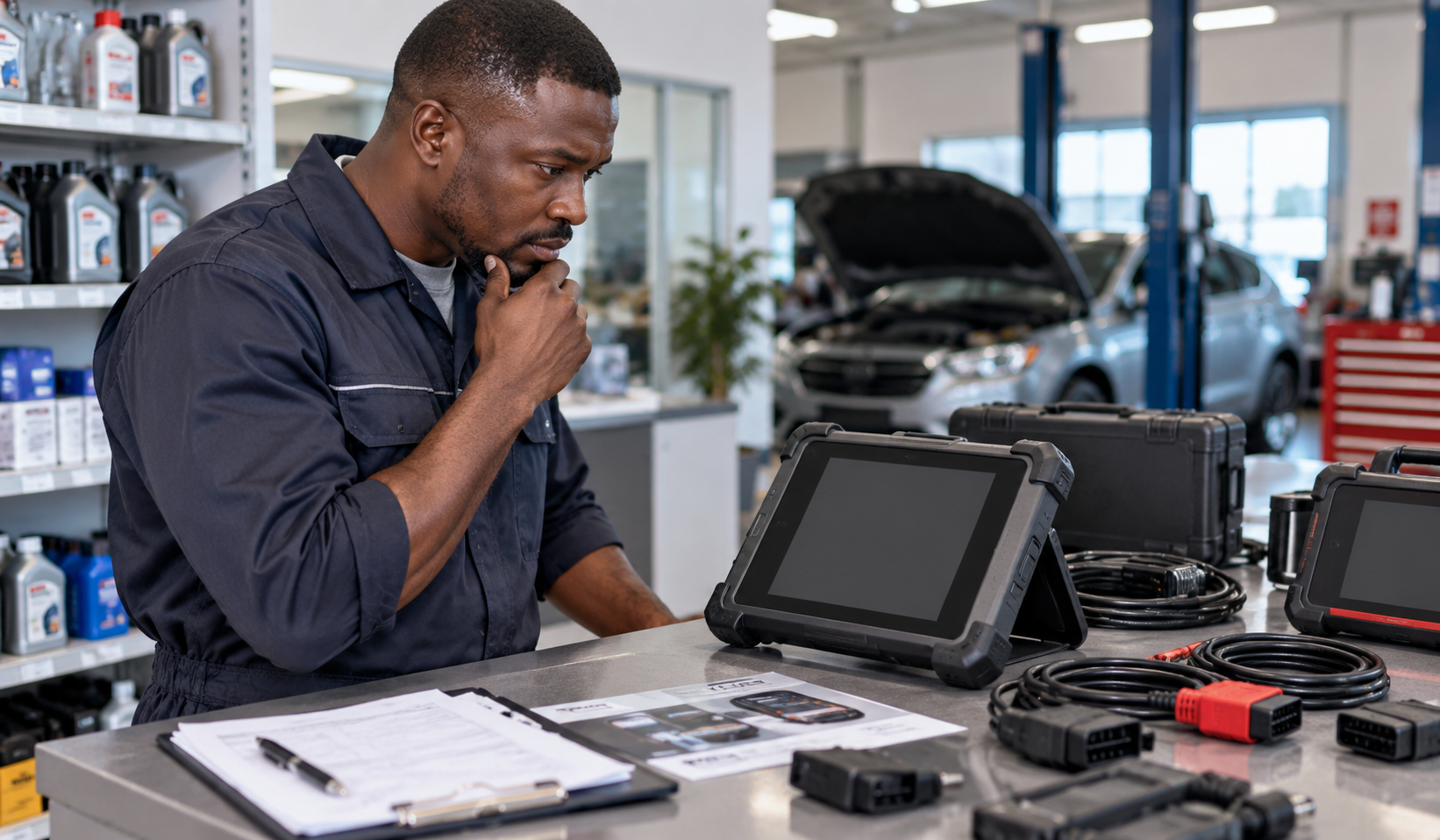
If you’re browsing listings for a diagnostic machine for sale, you’ve probably already noticed the problem: there are dozens of options, a huge spread in price, and very little plain-language guidance on what actually matters. Some
If you’re browsing listings for a diagnostic machine for sale, you’ve probably already noticed the problem: there are dozens of options, a huge spread in price, and very little plain-language guidance on what actually matters. Some tools cost a few thousand Rand, others run well into six figures, and on paper they can all claim to “read and clear codes.” That’s not much help when you’re trying to decide what your workshop actually needs.
This guide walks through the practical things to check before you buy — vehicle coverage, the difference between basic and full-system diagnostics, what you’re really paying for, subscriptions and updates, and how to avoid ending up with a clone or grey-import unit that causes more problems than it solves.

Start With Vehicle and Brand Coverage
Before you look at a single spec sheet, work out what you actually service. A mobile mechanic doing general passenger vehicles across multiple brands has very different needs from a workshop that specialises in one or two makes, or one that also handles light commercial and heavy-duty vehicles.
Coverage isn’t just “does it work on a Toyota.” Check whether the tool supports:
- The specific makes and model years that make up most of your workload, not just the popular ones
- Both petrol and diesel systems, if you service both
- Commercial or heavy-duty vehicles, if that’s part of your business
- Newer protocols like DoIP and CAN FD, which more recent vehicles use and older tools sometimes can’t handle at all
When you’re comparing a diagnostic machine for sale that covers 80 brands against one that covers 30, don’t be swayed by the bigger number alone — if it’s thin on the three or four brands you actually work on daily, that breadth is wasted. Ask for the actual coverage list for your region, not a global marketing figure.
Vehicle Diagnostic Machine Capability Levels: Basic vs Full-System
This is where most confusion happens, because “diagnostic tool” gets used loosely to describe three very different levels of equipment.
Basic code readers pull generic OBD-II fault codes and clear them. They’re cheap, simple, and fine for a quick check, but they won’t give you manufacturer-specific codes, live data, or any way to actually fix an intermittent or system-specific fault.
Professional scanners go further — live data streams, manufacturer-specific fault codes, and some guided diagnostics across multiple vehicle systems (engine, ABS, airbag, transmission, and so on). This is the level most independent workshops need to do proper diagnostic work rather than guesswork.
Full-system diagnostic machines with bi-directional control are the top tier. Bi-directional control means the tool doesn’t just read data — it can actively command components (cycling a relay, running an injector test, activating a solenoid) so you can confirm a fault rather than just suspect one. These machines typically also handle coding, key programming, and service resets like oil, EPB, SAS, and DPF regeneration.
If you’re regularly stuck diagnosing intermittent electrical faults or sensor issues by trial and error, that’s usually the sign you’ve outgrown a basic reader and need bi-directional capability.
Price vs Value: What You’re Actually Paying For
A car diagnostic machine price in South Africa can range from a few thousand Rand for an entry-level code reader to well over R100,000 for a full-system unit with heavy-duty and ADAS calibration capability. The price difference isn’t padding — it reflects real differences in what the hardware and software can do, and how often that software gets updated.
Before comparing price tags, work out cost per job, not cost of the unit. A cheaper tool that can’t do bi-directional tests or key programming means outsourcing that work, which eats into your margin every single time. A more capable machine costs more upfront but often pays for itself within a handful of jobs you’d otherwise have had to turn away or subcontract.
When you’re shopping for a diagnostic machine for sale, ask what’s actually included in the box — VCI (vehicle communication interface) hardware, cables, any optional software modules like EV or heavy-duty packages, and how many years of updates come standard.
Subscriptions, Software Updates, and What Happens When They Expire
This is one of the most overlooked parts of buying a diagnostic machine, and it catches a lot of workshops out later. Diagnostic software needs regular updates to keep working on new vehicle models and revised manufacturer protocols — without updates, coverage on newer vehicles starts to fall behind fairly quickly.
Any vehicle diagnostic machine is really a software product wrapped in hardware, so the update terms matter as much as the tool itself. Before you buy, ask directly:
- How many years of free updates are included with the purchase?
- What does renewal cost after that period, and how is it billed?
- Does the tool still function for existing vehicle coverage if you don’t renew, or does it stop working entirely?
- Are there separate optional software packages (like heavy-duty or EV modules) billed apart from the core update subscription?
Some machines on the market — including several models in Launch SA’s own range — come with two years of free software updates for passenger vehicles as standard, with optional heavy-duty or EV software available separately. Whatever brand you’re looking at, get this in writing before you commit, not after.
Genuine vs Grey Import: Why It Matters More Than People Think
South Africa’s diagnostic equipment market has its share of grey imports and outright clones, particularly for well-known brands, and they’re often sold at a price that looks too good to pass up. The risk isn’t just a shorter lifespan on the hardware — it’s usually a loss of software updates, no local warranty support, no access to genuine technical support, and in some cases activation or licensing that simply stops working after a few months.
If you’re searching for a car diagnostic machine near me, buying any diagnostic machine for sale from an authorised distributor matters as much as the brand itself. An authorised supplier can confirm the unit’s serial number and activation status, provide local warranty backing, and actually get you through to manufacturer support when something goes wrong — none of which a grey-market seller can offer. Launch SA is an authorised distributor for both Launch and ThinkCar diagnostic tools in South Africa, which means every unit sold is registered, warrantied, and eligible for genuine software updates from day one.
Diagnostic Machine for Sale: Quick Checklist Before You Buy
- Confirm the makes, models, and vehicle types you actually service are properly covered — not just listed
- Decide whether you need basic code reading, professional-level diagnostics, or full bi-directional control
- Get the total cost picture: unit price, included accessories, and what optional modules cost extra
- Get the update/subscription terms in writing — free period, renewal cost, and what happens if you don’t renew
- Verify the seller is an authorised distributor and the unit comes with a genuine local warranty
- Ask about training and after-sales support — a powerful tool is only useful if your team knows how to use it
- Where possible, see the machine demonstrated on an actual vehicle before you commit
Frequently Asked Questions
What’s the difference between a code reader and a full diagnostic machine? A code reader only pulls and clears generic fault codes. A full diagnostic machine reads manufacturer-specific codes across multiple vehicle systems, shows live data, and — at the higher end — allows bi-directional control to actively test components rather than just read fault codes from them.
How much does a car diagnostic machine cost in South Africa? Pricing varies widely by capability, from a few thousand Rand for a basic code reader to upwards of R100,000 for a full-system, bi-directional machine with heavy-duty or ADAS calibration support. The right price depends on the vehicles you service and the depth of diagnostic work you need to do.
How do I know if a diagnostic machine is genuine and not a grey import or clone? Buy from an authorised distributor who can verify the unit’s serial number, confirm its activation status, and back it with a local warranty and genuine manufacturer software updates. If a seller can’t provide proof of authorised distribution, treat the low price as a warning sign rather than a bargain.
Launch SA is an authorised distributor of Launch and ThinkCar diagnostic equipment, based in Bedfordview, Germiston, with showroom and demonstration facilities for workshops across South Africa and the broader Southern African region.
Share this article
A quick overview of the topics covered in this article.
Follow us
Latest articles
September 24, 2026
September 24, 2026